

When you're choosing a robo advisor, performance matters. Wealthsimple ranks among Canada's pioneering robo advisors, offering diversified portfolios tailored to your risk tolerance and investment goals.
But how do its returns actually stack up against competitors? Over the past year, Wealthsimple's balanced portfolio returned 10.3%, lagging behind Questwealth's 13.54% and Justwealth's 14.78%. The gap widens when you look at long-term performance: since inception, Wealthsimple's balanced portfolio has returned 73%, while Questwealth has delivered 105.99% and Justwealth an estimated 124%.
This article breaks down Wealthsimple's performance against Questwealth and Justwealth, examining both short-term and long-term returns across balanced and aggressive portfolios. We'll also compare fees, minimum investment requirements, and what these numbers mean for your investment strategy.
Whether you're a new investor attracted to Wealthsimple's $1 minimum or an experienced investor weighing portfolio performance, you'll find the data you need to make an informed choice.
Is Wealthsimple portfolio performance the best in Canada?
Wealthsimple ranks among Canada's first robo portfolios. It offers competitive products and services, but its performance over the past year falls in the middle—its balanced portfolio achieved lower returns than comparable portfolios from Questwealth and JustWealth.
Consider two factors when you assess Wealthsimple's recent performance.
First, foreign tariff politics have made the stock market volatile. Measuring any portfolio's performance over a year doesn't accurately assess its quality when it may rise or fall several percentage points on any given day.
Second, compounding returns work best over multi-year or even multi-decade periods, making long-term performance crucial. However, Wealthsimple's balanced portfolio has returned 73% since its January 2014 inception—behind Justwealth's estimated 124% total returns since January 2016 and Questwealth's 105.99% returns since November 2014.
What portfolios does Wealthsimple offer?
Wealthsimple offers a wide range of portfolios. The classic portfolio comes in several forms: its conservative version gives you some stock exposure with over 60% invested in bonds. The balanced classic portfolio allocates 60% to stocks, 37.08% to bonds, and 2.92% to gold. The classic growth portfolio increases stock allocation to 80%, with 17.5% in bonds and 2.5% in gold. Finally, the aggressive classic portfolio invests 100% in stocks.
Beyond the classic portfolio, Wealthsimple provides several other options. The socially responsible portfolio excludes the top 25% carbon emitters in each industry and invests only in companies with at least 3 women on their board of directors.
For income-focused investors, Wealthsimple offers 3 portfolios with interest ranging from 2.75% to 4.1%.
Finally, the Halal portfolio provides investment options for those who want to grow their wealth while adhering to Islamic law—every company in this portfolio makes less than 5% of its income from adult entertainment, conventional banking, weapons, alcohol, tobacco, and pork-related products.
For clarity and simplicity, this article focuses on the balanced and aggressive versions of the classic portfolio.
Wealthsimple balanced portfolio performance
The chart below is based on a balanced portfolio from each of the services listed:
| Robo Advisor | MER | Management fee | 1 Year Return | Return Since Inception |
|---|---|---|---|---|
| Wealthsimple managed investing | 0.12% | 0.5% | 10.3% | 73% (January 2014) |
| Questwealth | 0.10% - 0.11% | 0.20% - 0.25% | 13.54% | 105.99% (November 2014) |
| Justwealth | 0.18% | 0.5% | 14.78% | 124% (estimated) (January 2016) |
Wealthsimple legal disclaimer.
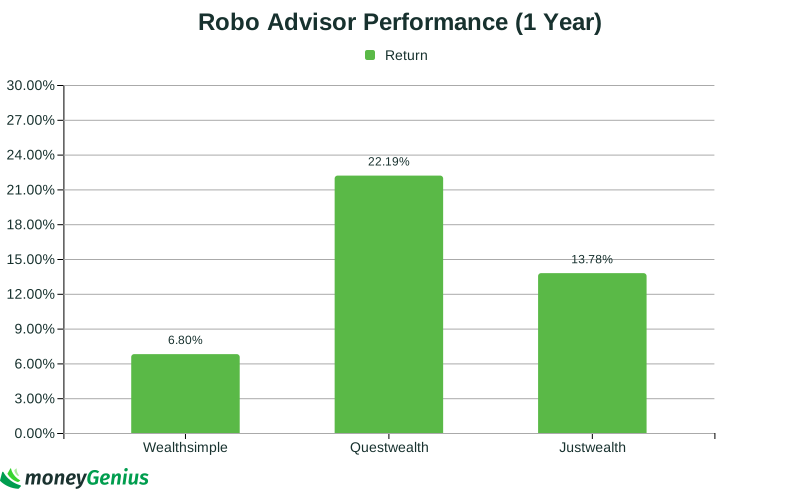
1 year portfolio performance comparison
As noted earlier, the markets have experienced particular volatility over the past year due to tariff threats and geopolitical uncertainty. Regardless, investors who stayed invested throughout the volatility have seen strong returns.
From August 31, 2024, to August 31, 2025, Wealthsimple's balanced portfolio returned 10.3%. In contrast, Questwealth's balanced portfolio returned 13.54% over a similar period. Finally, Justwealth's balanced global growth portfolio returned 14.78%.
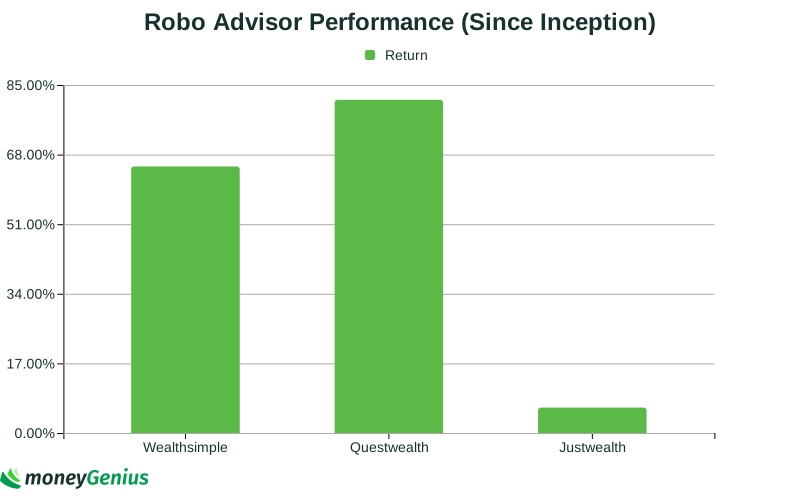
Return since inception comparison
Since its January 2014 inception, Wealthsimple's balanced portfolio has generated 73% returns. Questwealth has returned 105.99% since November 2014. Finally, Justwealth has returned about 124% since January 2016.
Wealthsimple aggressive portfolio performance
The chart below is based on an aggressive portfolio from each of the services listed:
| Robo Advisor | MER | Management fee | 1 Year Return | Return Since Inception |
|---|---|---|---|---|
| Wealthsimple managed investing | 0.10% | 0.50% | 16.4% | 82.5% (July 2019) |
| Questwealth | 0.10% - 0.12% | 0.20 - 25% | 19.58% | 181.86% (November 2014) |
| Justwealth | 0.14% | 0.50% | 21.39% | 173% (Estimated) (January 2016) |
1 year portfolio performance comparison
Wealthsimple's aggressive portfolio has returned 16.4% over the past year—lower than a comparable aggressive portfolio at Questwealth, which has returned 19.58%. Justwealth's aggressive portfolio has returned 21.39% over the past year.
Return since inception comparison
Wealthsimple's aggressive portfolio has returned 82.5% since its July 2019 inception. Questwealth's aggressive portfolio has returned 181.86% since its November 2014 inception. Justwealth's portfolio has returned an estimated 173% since January 2016.
Note the difference in inception dates. Questwealth's portfolio launched over a year before Justwealth's and nearly 5 years before Wealthsimple's, making since-inception comparisons imperfect—Questwealth's portfolio has had significantly more time to compound.
Robo advisor fee comparison
All three companies charge within an expected range for robo advisor services—below the traditional portfolio management fee of roughly 2% but significantly higher than many total market index funds' fees (often 0.05% to 0.20% MER with no management fee). Regardless, you may find peace of mind in robo advisor help if you're uncomfortable investing money independently.
These fees use a sliding scale, so comparing who's most competitive for your portfolio matters. The chart below compares fees for Wealthsimple's classic balanced portfolio and comparable portfolios at Questwealth and Justwealth.
| Investment Size | Wealthsimple | Questwealth | Justwealth |
|---|---|---|---|
| $1,000 | $6.25 | $3.6 | N/A |
| $10,000 | $62 | $36 | $68 |
| $100,000 | $520 | $310 | $680 |
| $1,000,000 | $5,200 | $3,100 | $5,800 |
Questwealth has the lowest fees but requires a $1,000 account minimum. Justwealth also requires a $5,000 entry point and charges the highest fees. Wealthsimple charges lower fees than Justwealth but higher than Questwealth. You can start investing with only $1, making Wealthsimple attractive for new investors.
What is a portfolio investment? The Wealthsimple example
A portfolio investment gives you passive ownership of stocks, bonds, or other assets. Its purpose: help you grow your money over time or generate income. If you're a young investor, you'd likely benefit most from a portfolio highly concentrated in stocks—this asset class has historically provided the highest returns over long periods.
If you're a retiree looking to protect your wealth, you may want a portfolio highly concentrated in bonds or guaranteed investment certificates (GICs)—these are far less volatile than stocks, even if they generate lower long-term returns.
Portfolios also provide built-in diversification. The Wealthsimple classic balanced portfolio illustrates this point. The portfolio invests 60% in thousands of stocks from companies around the world, ensuring that if one company's stock price drops, the portfolio feels minimal impact. The 37.08% allocation to bonds also helps with diversification.
Generally, stock and bond prices move inversely (though not always), so when one goes up, the other often goes down. Therefore, if the entire stock market drops in value, your bond exposure may help lessen your portfolio's short-term negative impact.
How a robo advisor works
Robo advisors work on a few levels:
- They help you realize your risk tolerance
- They’ll use your risk tolerance to create a portfolio for you
- They use an algorithm to manage the investments held in your portfolio
The algorithm adjusts your portfolio as needed, like a fund manager would—but since it's not an actual person doing this work, the robo advisor's fees stay lower.
Wealthsimple first provided robo advisor services in 2014, making it one of Canada's first companies to do so.
Like other robo advisors, Wealthsimple offers a user-friendly quiz to evaluate your risk tolerance as an investor.
From there, Wealthsimple tailors an investment portfolio that's low, medium, or high volatility. The resulting portfolio comprises financial assets like stocks, bonds, gold, and cash. The portfolio then works to grow your wealth over time.
What should you look for in a portfolio investment?
There are six key metrics to keep in mind when looking for a portfolio investment:
- Portfolio performance: Past earnings and how the portfolio functioned during difficult economic times can (but don't always) indicate future performance. The most important part of a portfolio's performance: long-term growth.
- Asset allocation: Your investing goals should determine your ideal portfolio's asset allocation. For someone looking to grow their wealth over a long period, a portfolio mostly composed of stocks would work best. Someone looking to protect their wealth should seek a portfolio more heavily concentrated in less volatile assets like bonds, GICs, and cash.
- Fees: The best robo advisors don't charge a commission on trades. Management fees calculate as a percentage of the assets they manage for you.
- Ease of use: The point of a robo advisor: make investing easy. The best ones make depositing funds, reinvesting dividends, and rebalancing your portfolio feel seamless.
- Account minimum: This can range from $1 (Wealthsimple) to $5,000 (Justwealth). If you're a new investor, this account minimum may limit which companies you can choose.
- Customer service: Being able to work through any issues with a person, rather than a chatbot, often proves desirable.
Growth portfolio
A growth portfolio invests more heavily in stocks than bonds, GICs, cash, and other assets that are more stable but less likely to increase dramatically in value. This makes growth portfolios more vulnerable to market fluctuations in the short term. However, they also have the potential to generate far greater returns in the long term.
A makeup of 20% bonds and 80% stocks is common for a growth portfolio. For long-term investors who can handle volatility, investing 100% in stocks is also common.













Pros and cons of portfolio investment
| Pros | Cons |
|---|---|
|
|
Wealthsimple alternatives
Aside from Questwealth and Justwealth, there are many other non-Wealthsimple robo advising options out there. Here are a few alternatives to check out:
| Alternative | Notable Features |
|---|---|
| RBC InvestEase | * Will invest small sums * Responsible investment options * NOMI Insights tool |
| CI Direct Investing | * Will invest small sums * Responsible investment options * NOMI Insights tool |
| Next Wealth Direct | * Straightforward fee structure * Solid track record * Partnerships with human advisors |
| Modern Advisor | * Provides more actively managed portfolios* Provides classic, socially responsible, and high-interest savings portfolios* Management fee of 0.50% and MER of 0.20% |
| BMO SmartFolio | * Simple and easy to understand portfolio construction*Money can be transferred in one step*Ideal for beginning investors |
The bottom line: Does Wealthsimple have the best performance?
Wealthsimple's portfolio performance has struggled. Over the past year, it has delivered lower returns than both QuestWealth and Justwealth. Since inception, both its balanced and aggressive portfolios have underperformed Questwealth and Justwealth.
FAQ
What's a portfolio investment?
A portfolio investment comprises a collection of financial assets—stocks, bonds, GICs, gold, and other assets. Investing in a portfolio gives you diversification across stocks and asset classes. Different weightings of asset classes affect particular portfolios' ideal use cases.
Portfolios heavily weighted in stocks work best for investors aiming to grow their wealth over a long period, whereas portfolios concentrated in more stable assets like GICs, bonds, and cash suit those looking to protect their wealth and/or live off their investments.
Is Wealthsimple’s portfolio performance the best in Canada?
Choosing a portfolio is a personal decision. If you're purely concerned with performance, QuestWealth and Justwealth's portfolios have historically performed better than Wealthsimple's. Nonetheless, if you're a new investor with little disposable income, Wealthsimple's $1 minimum investment could appeal to you.
How does Questwealth portfolio performance compare to others?
Questwealth has delivered higher overall returns than Wealthsimple. However, its balanced portfolio has underperformed Justwealth, while its aggressive portfolio has outperformed Justwealth.
Questwealth's balanced portfolio has returned 105.99% since inception, compared to Wealthsimple's 73% and Justwealth's 124%. Furthermore, Questwealth's aggressive portfolio has returned 181.86% since inception, compared to Wealthsimple's 82.5% and Justwealth's 173%.
Should I use Wealthsimple?
Choosing a financial service, including a robo advisor, always comes down to personal preference. Do the research, ask people you trust for advice, consider what your investment goals are, and make the best decision you can.
That said, Wealthsimple has historically seen acceptable, albeit not market-beating, returns. It's also a safe company to store your money with, since the Canadian Investor Protection Fund (CIPF) regulates it.
How has Wealthsimple performed historically?
Wealthsimple's aggressive and balanced portfolios have historically performed worst compared to other robo investors. They've lagged behind both Justwealth and Questwealth over the past year and since their inception.
Which Wealthsimple portfolio has the best returns?
Wealthsimple's aggressive portfolio has offered the best returns, both in the last year and since inception. Over the past year, the aggressive portfolio has returned 16.4%, whereas the balanced portfolio has returned 10.3%. Since its 2019 inception, the aggressive portfolio has returned 82.5%. The balanced portfolio has returned 73%, despite launching 5 years earlier in 2014.
Is Wealthsimple safe for my investments?
Wealthsimple is safe for your investments. The Canadian Investor Protection Fund (CIPF) regulates it, providing up to $1 million to clients if their investment company becomes insolvent.
Federal and provincial regulatory bodies, including the Canadian Investment Regulatory Organisation (CIRO) and the Ontario Securities Commission (OSC), also monitor Wealthsimple.
Finally, Wealthsimple's management has remained historically very stable. Chief executive officer (CEO) Michael Katchen founded the company in 2014 and has served as the only CEO in Wealthsimple's existence.
What is Wealthsimple's average annual return?
Wealthsimple's average annual return depends on the portfolio type. The classic balanced portfolio has returned approximately 5.8% annually since 2014. The classic aggressive portfolio has returned approximately 10.3% annually since 2019.






































Leave a comment
Comments