


Today, “debt” is considered a bad word no matter what you spend the money on. But, not all debt is created equal, and taking out a loan for some things may actually be beneficial for you in the long run.
Bad debt is usually saddled with a high interest rate and has the potential to compound quickly, such as credit card debt. Good debt comes with a lower interest rate attached and typically increases in value over time, such as real estate.
Of course, good debt still needs to be handled responsibly. No matter how good of an investment in your future it is, it still has the potential to get messy if you don’t manage it properly.
Let’s dig into the main differences between debts and some examples of each.
Good debt vs. bad debt
Here’s a quick rule of thumb for what makes some debt good and others bad:
| Good debt | Good debt examples |
|---|---|
|
|
| Bad debt | Bad debt examples |
|
|
What is good debt?
Good debt is basically any debt that improves your financial future. It allows you to either buy an appreciating asset, increase your future earning potential, or both.
Any debt accumulated for the purpose of earning money in the future or increasing future earnings are examples of good debt.
But remember that just because something is considered “good debt,” doesn’t mean you can pile it on willy-nilly. It still needs to be handled responsibly and has the potential to build out of control.
Student loans
One universal example of good debt is student loans.
While it may seem overwhelming when students take out large amounts of money to fund their education, the debt is considered good debt because it should lead to a degree or certification, which usually leads to higher earning potential.
Interest rates hover around prime rate (currently 4.45%), or within a couple of percentage points higher.
While these are typically higher than a mortgage rate, they’re significantly lower than the interest rate on a credit card. The best part? Interest paid on a student loan can be claimed on your tax return.
On April 1, 2023, students will no longer be charged interest on their federal student loans and apprentice loans. Interest still applies on provincial loans in select provinces.
Another benefit of student loans is that it helps build credit for students who don’t usually have a lengthy credit history.
Mortgages
There’s some debate about whether a mortgage is good debt or not, since it can depend on your situation.
If you purchase a house that has a reasonable chance of increasing in value over time (beyond the rate of inflation), this could be considered good debt. You’re likely to earn money on the house once you decide to sell.
On the other hand, if house prices remain stagnant it could be considered bad debt, especially if the associated costs of homeownership (repairs and maintenance) increase over time.
Also, mortgage debt is more often considered good debt in the United States because mortgage interest is deductible for taxes. Unfortunately, that’s not the case in Canada.
Only buying what you can afford, getting a great mortgage rate, and downsizing when necessary are all great strategies for keeping your mortgage under control.
What is bad debt?
Bad debt is borrowed money used to purchase things that lose value over time – such as most consumer goods – and generally involves higher interest rates.
This type will make your financial situation worse in the future and should be avoided as much as possible.
It’s one thing to say something is bad debt, and a whole other thing to explain why it should be avoided.
Credit card debt
Of course, the absurdly high interest rates on most credit cards alone is enough to make this bad debt, but there are other factors as well.
Credit card debit is typically an indicator of overspending and is usually associated with buying too much “stuff” – the latest phone, fashionable (and expensive) clothing, and nights out on the town. These are things that won’t increase in value.
If your credit score hasn’t fallen too much yet, taking advantage of a good balance transfer offer or low interest credit card is a great way to save on interest.
Want a recommendation? The BMO CashBack Mastercard has one of the best balance transfer offers in Canada – 0.99% interest for 9 months.
Check out more details here:
 $20 GeniusCash + Up to 5% cash back + No annual fee.*
The BMO CashBack Mastercard is a no fee credit card that puts you in control and lets you choose when you receive your cash back rewards. To start, you'll get up to 5% cash back in your first 3 months.*
- Genius Rating:
- Rewards rate: around 1.01%
- Our credit estimate: Good (660-725)
- Welcome bonus: up to $100* (Ends 2026/01/31)
- Annual fee: $0
- Interest: 21.99% on purchases, 23.99% on cash*
- Balance transfer: 0.99% for 9 months (2% fee)
- * See rates and fees
- It'll take you to the bank's secure site.
- You'll get the chance to read the offer and product details.
- If you choose to apply, filling the form should take between 10 to 15 minutes.
 GC: $20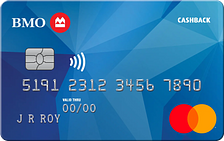
- It'll take you to the bank's secure site.
- You'll get the chance to read the offer and product details.
- If you choose to apply, filling the form should take between 10 to 15 minutes.
Payday loans
Another example of bad debt would be payday loans.
There are numerous high fees associated with payday loans as well as a very high interest rate on almost all kinds. Payday loans are another indicator of overspending and not typically associated with increasing future earnings.
The best course of action is never taking these loans out in the first place. If it’s too late, get it paid off as soon as possible. You may even want to consider taking out a loan at a lower interest to cover your payday loan before the charges get too out of hand.
Car loans
This one can really go either way. Most financial sites list it as bad debt since new cars lose so much value as soon as you drive them off the lot. This means your loan can’t be considered an investment, since you’re (almost) guaranteed to sell it for less than you bought it for.
It may be considered good debt because vehicles are essential to many people’s lives, plus the interest rates aren’t usually too high.
We put it in bad debt since you should always be cautious when making such a big purchase. Maybe a used car you don’t have to finance is better for your current situation?
The interest on car loans usually isn’t too bad, so tackling it like any other loan is a pretty good strategy: pay it off as soon as you can. Make regular payments that are baked into your budget.
4 options for getting help for your bad debt
If any of these situations sound like you, just remember that having debt isn’t the end of the world. There are always strategies to help you get back on your feet.
Of course, the ideal scenario is just to rework your budget and pay it off the normal way, but there will be times when that just isn’t possible for your situation.
1. Debt consolidation
If you find yourself carrying a large amount of bad debt, you may want to consider consolidating the balances into one.
Depending on your personal and financial situation, you may be able to consolidate the debt into one debt with a lower interest rate.
Then, rather than several debt payments per month, you would only have to make one monthly payment, simplifying your budget while saving on interest.
2. Debt settlement
Another option for bad debt is a debt settlement. This happens when a consumer settles the debt principal with the creditor for a smaller amount than what’s actually owed.
The downside is that a debt settlement could have a negative impact on your credit score and future borrowing ability may be limited.
3. Consumer proposal
A consumer proposal is another method of dealing with bad debt. This involves a legally-binding offer to creditors to pay a percentage of the amounts owing and is similar to declaring bankruptcy.
This is considered a last resort for anyone with bad debt as it can negatively impact a credit score for years.
4. Avoid falling into more debt
Another way to help with your current debt load is to make sure you’re not adding any more on top of it.
This could mean ditching your credit card, which is an extremely easy way to rack up extra debt you won’t be able to handle.
With that said, that doesn’t mean you have to give up on credit card rewards – which could actually be helping you save money.
If you want to avoid hurting your credit score and racking up extra debt, you could consider a prepaid credit card. How it works is you only ever spend money you’ve preloaded on the card, so it’s not actually a credit product at all. Yet, it still gets you the benefits of a credit card.
Consider the KOHO Essential Mastercard, for example, which gives you 0.5% cash back on everything for no annual fee, plus has lower foreign transaction fees of 1.5% (instead of the usual 2.5%).
What’s a good debt-to-income ratio to have?
A debt-to-income ratio is a measure of how much debt someone has relative to their monthly or yearly income.
A “healthy” ratio is usually considered 36% or lower. This means you’d have a “healthy” debt-to-income ratio if your monthly income was $5,000 and your debt payments were $1,800 per month (or less).
Here’s the general rule of thumb:
- less than 36% is healthy,
- 37% – 42% is considered manageable,
- 43% – 49% is concerning, and
- 50% or more is considered unhealthy.
Not all debt is created equal
Good debt (such as student loans) involves lower interest rates and increases future earning potential.
Bad debt involves high interest rates and buying items that won’t appreciate in value, and won’t increase future earning potential.
When someone accumulates large amounts of bad (or good) debt, there are options – like debt consolidation – available.



 $100 GeniusCash + Unlimited transactions for $0 + Ding-free non-affiliated ATM usage.









FAQ
What is the difference between good debt and bad debt?
Good debt generally comes with a lower interest rate and increases in value or has a high ROI, such as real estate. Bad debt, on the other hand, depreciates in value and comes with a higher interest rate. Another way of putting it is you can typically stay on top of good debt or pay it down, whereas bad debt can negatively impact your financial situation and credit score if not managed responsibly.
What is a good debt-to-income ratio?
A good debt-to-income ratio is less than 36%. If you’re under the 42% mark, your debt is still manageable, but anything above 43% and higher is concerning and needs attention.
Why is a mortgage good debt?
Mortgages are usually considered good debts because rates are low, you’re building equity if you keep up with your payments, and property tends to increase in value with time.




































Leave a comment
Comments